 |
|
 |
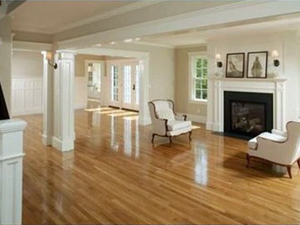
| This job took a month to complete - 4,000 square feet of white oak, installed, sanded with 3 coats of poly. |
|
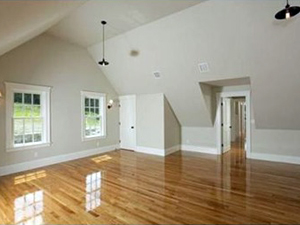
Here is the loft of the same house. Gorgeous! |
| |
 |
|
 |
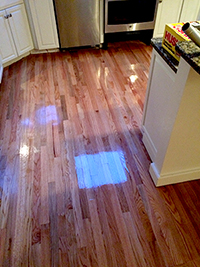
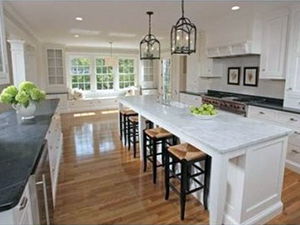
| When people entertain guests at this kitchen counter, you can bet they will talk about how the sun hits the floor and makes the grain stand out beautifully. |
|
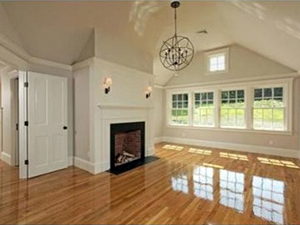
This is a master bedroom of a beautiful home. The fireplace was framed, though its hard to see in the picture. Sometimes, as in this case, fireplaces are not 100% square to the walls. Though it isn’t noticeable, there is a “correction” row of flooring specially cut so the boards run parallel to both the fireplace front, and to the walls.“Craftsmanship meets geometry” |
| |
 |
|
 |
| |
 |
|
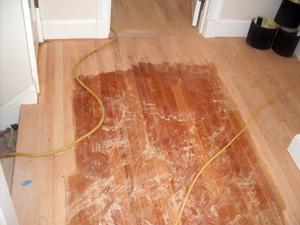 |
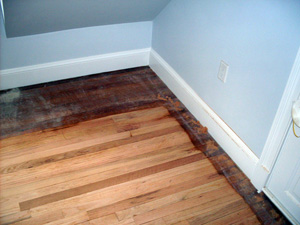
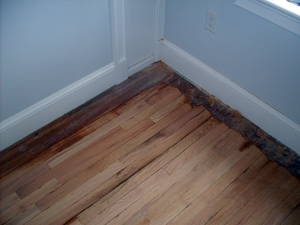
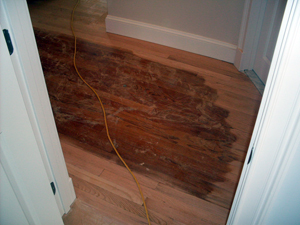
| These pictures demonstrate how little dust is actually created when sanding a floor. All precautions are taken to ensure no dust escapes the job site area. Any and all items that have to remain in the room are covered with plastic. The entire area is vacuumed meticulously afterward. |
| |
 |
|
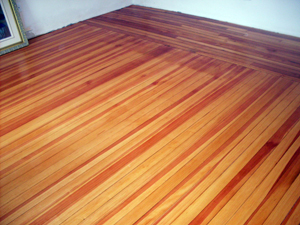 |
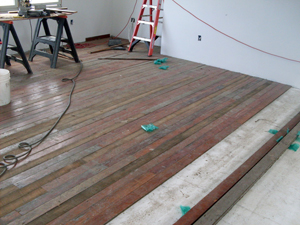
| This client wanted to use boards reclaimed from an old building. They are ¾” thick fir planks, with no tongue and groove. I used staples every 4 inches to make sure they stayed tight together. |
|
|
| |
 |
|
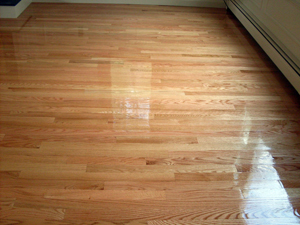 |
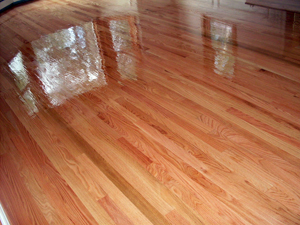
| Here is a stunning example of high-gloss polyurethane on a newly installed red oak floor. |
|
|
| |
 |
|
 |
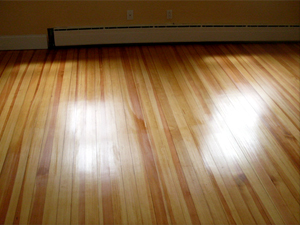
| This floor had bad stains in it, which were too deep to fully sand out. However, a careful sanding and a coat of semi-gloss gives the floor a new warmth. |
|
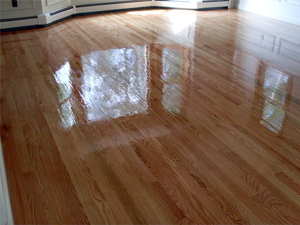
Gloss polyurethane on a newly installed white oak floor. |
| |
 |
|
 |
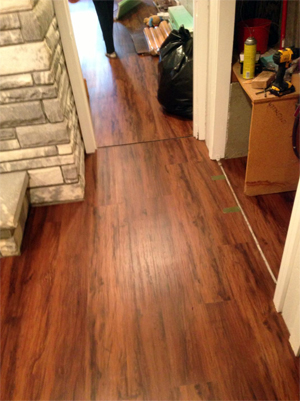
| This floor is made of vinyl! There is a concrete basement floor under it. With vinyl, no vapour barriers are needed between itself and the concrete. It comes thick enough to feel padded too. The family that asked me to install it, had children, and this is now their play area. |
|
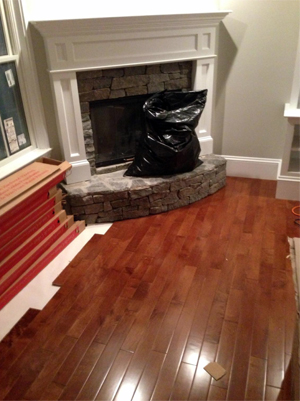
This is a pre-finished, pre-stained floor made out of Maple. The customer had me install it directly on to the floor-boards without adding a plywood subfloor first. They also had the flooring butt up tight to the baseboards, instead of leaving an expansion gap. Because their house is so stable with its indoor environment, and the flooring had plenty of time to acclimate, this less than cautious procedure works just fine in this case. Very few houses can sustain such a controlled environment. |
| |
 |
|
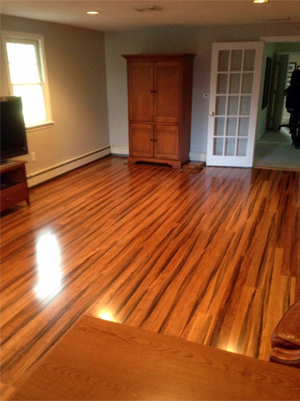 |
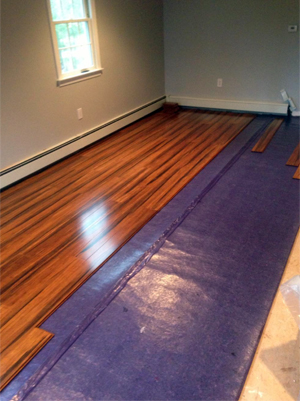
| Bamboo! This is my favourite bamboo - 5” wide click down bamboo. Bamboo is actually not wood, its grass. It retains a high moisture content yet stays stable all year. This particular Bamboo is 3/8” thick. Anything thicker is made as tongue-in-groove, and can be glued down. I do not ever nail Bamboo down, as it leaves a dimple on top of the board above where the nail goes in. It’s too hard of a floor to nail. Finish-gun nails just bend, and staple leave an even bigger dimple on the surface. |
|
Here is the finished bamboo 5” click-down floor. |
| |
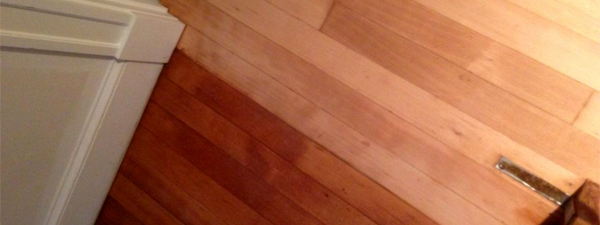 |
| The reason you see two shades of wood is because, as a restoration project, the wood looks better when stained a slightly darker shade than the original. This old, old floor is made of fir. It was a less expensive way to make a floor, back when this house was built, in the late 1700’s. It looks like the much costlier Heart-Pine, which is an extremely oily wood that lasts forever. Nevertheless, if any wood is kept dry, and free of rot, not worn down with steel boots and dog claws, it is good for hundreds of years. It’s the polyurethane that wears out. There is no polyurethane in this picture.
Fully insured and bonded. Member of the National Wood Flooring Asscociation.
|